Working to move LLM evaluations into the hands of the communities that actually use them, Victor will be part of a cohort dedicated to researching how we can program AI to use data that doesn’t breach our privacy.
When Anthropic published a report this week on how AI is making formal software verification practical at scale, it contained an experiment with deep Brown CS roots.
It’s tempting, Adriana explains, to think that generative models will absorb the challenge of these complex, highly constrained spaces without the need for explicit optimization, but she argues the opposite: optimization is not merely still relevant, it’s becoming more powerful.
Brown CS community members are returning from the event with five accepted papers, and the work spans research areas ranging from activism to data maintenance to AI and mental health.
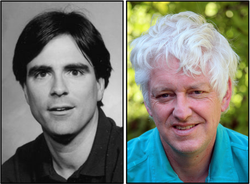
Brown CS is glad to announce that applications are open for the Randy F. Pausch '82 Computer Science Undergraduate Summer Research Award, which provides $15,000 annually to support an undergraduate engaged in an intensive faculty-student summer research partnership with the Department of Computer Science.
“The longer I am a scientist," she says, "the more I see it as an infinite game. A finite game is where there's a winner and a loser, and at some point, it ends. [In] an infinite game, you want to play to keep playing."
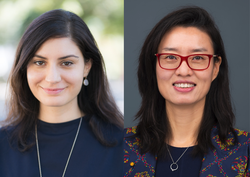
It’s been a meteoric rise through CS academia for two Brown CS PhD alums this summer. Alexandra Papoutsaki has just become department chair at Pomona College’s computer science department and Danfeng (Daphne) Yao was appointed the computer science department head at NC State.
This semester, CNTR is starting a new project called the Career Atlas, and we’re really excited to bring students into the process from the beginning. The idea is to turn real career journeys into visual pathways that students can explore.
The leader of Brown’s NSF-funded AI research institute talks AI doom scenarios, the frontier labs’ “slowdown”, and making AI safer.
Recently included in the Forbes 30 Under 30, Heidi designed Brown's first independent concentration in Game Design and Development.