Brown CS community members are returning from the event with five accepted papers, and the work spans research areas ranging from activism to data maintenance to AI and mental health.
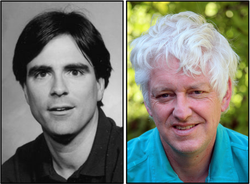
Brown CS is glad to announce that applications are open for the Randy F. Pausch '82 Computer Science Undergraduate Summer Research Award, which provides $15,000 annually to support an undergraduate engaged in an intensive faculty-student summer research partnership with the Department of Computer Science.
“The longer I am a scientist," she says, "the more I see it as an infinite game. A finite game is where there's a winner and a loser, and at some point, it ends. [In] an infinite game, you want to play to keep playing."
This semester, CNTR is starting a new project called the Career Atlas, and we’re really excited to bring students into the process from the beginning. The idea is to turn real career journeys into visual pathways that students can explore.
The leader of Brown’s NSF-funded AI research institute talks AI doom scenarios, the frontier labs’ “slowdown”, and making AI safer.
Recently included in the Forbes 30 Under 30, Heidi designed Brown's first independent concentration in Game Design and Development.
The course tackles cybersecurity issues including deepfakes, copyright, privacy, national security and decision-making.
It focuses on transformorphic computing, a fundamentally new approach to automatically and correctly improving widely deployed systems without burdening their users and with strong guarantees about their behavior.
In her solo paper, written when Kathi was a faculty member at Worcester Polytechnic Institute, she returns to and makes progress on Soloway’s Rainfall problem, often used to assess student programming skills in introductory courses.
The ultimate goal is to produce new systems that enable practitioners to focus solely on creating and improving the accuracy of modern AI systems, without having to worry about details related to efficient execution and resource management.