Brown CS Alum Ed Lazowska Receives University Of Washington's Distinguished Teaching Legacy Award
- Posted by Jesse Polhemus
- on May 27, 2026
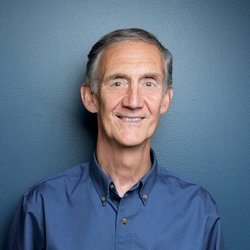
“I'm deeply honored by this award,” Ed says, “but my impact is measured in milli-Andys.”

“I'm deeply honored by this award,” Ed says, “but my impact is measured in milli-Andys.”
Last month, Brown CS faculty member Michael Littman, Brown University’s Associate Provost for Artificial Intelligence, received one of his profession’s highest honors by being elected an Academy member.
At this year’s Boston event, Sorin will be joining two of the field's other thought leaders for a keynote panel in memory of genomics pioneer Craig Venter, his colleague and friend.
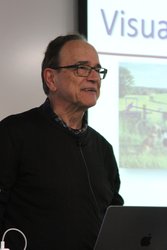
Each year, Brown CS invites one of the field's most prominent scientists to address wide-ranging topics in honor of Paris. Last month, Paul Pigott Professor of Engineering Leonidas (Leo) J. Guibas of Stanford University delivered the twenty-fifth annual Paris C. Kanellakis Memorial Lecture: “The Space Between The Images – Visual Learning From Relations”.
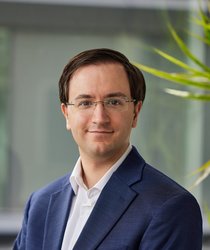
Brown CS is happy to announce that with the anticipated approval of Brown’s Corporation and effective as of July 1, 2026, Stephen Bach has been promoted to Associate Professor with tenure.
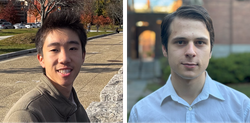
The award recognizes strong achievement from undergraduate researchers and provides $13,350 to enable them to continue their work over the summer.
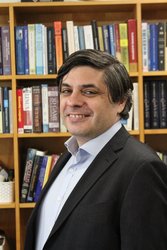
Brown CS is happy to announce that with the anticipated approval of Brown University’s Corporation and effective as of July 1, 2026, George Konidaris has been promoted to the rank of Full Professor.
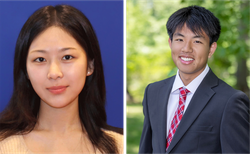
For Erin, the complexity of the immune system is less a mystery than a puzzle waiting to be understood. Everest is driven by a simple question: How can machines better support people in high-pressure environments?
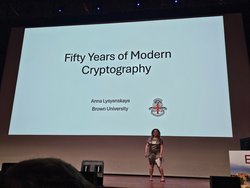
At one of the world's leading cryptography conferences, Anna laid out the field's history, starting with Diffie and Hellman’s breakthrough paper in 1976 that eventually paved the way to secure online communications.
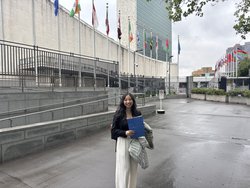
Last week, Brown CS Master's student Ilana Nguyen spoke at the UN about AI in education. The central question: How do we ensure that AI expands opportunity rather than reinforce existing inequities?
Computer Science at Brown University
Providence, Rhode Island 02912 USA
Phone: 401-863-7600
Map & Directions /
Contact Us


