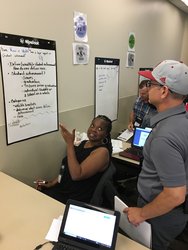
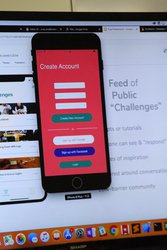
"The Bootstrap curriculum stands out from the numerous computer science and computational thinking curricula that have cropped up in recent years," says Thea Charles, Head of Knowledge and Impact at Siegel Family Endowment (SFE), which is making a gift to support the K-12 CS curriculum directed by Kathi Fisler, Shriram Krishnamurthi, and Emmanuel Schanzer of Brown …
The robots return! Rhode Island Robot Block Party will take place on Saturday, April 13, 2019, from 12-4 PM at the WaterFire Arts Center (475 Valley Street).The event, an expo founded by the Rhode Island Students of the Future in partnership with Brown University's Humanity Centered Robotics Initiative and Brown CS, …
The Randy F. Pausch '82 Computer Science Undergraduate Summer Research Award, given this year to Evan Cater to support his work with Brown CS Professor Michael Littman, recognizes strong achievement from young students and offers them the opportunity to partner with faculty and advance work that began in the undergraduate research program.A generous gift from Peter …
Since the earliest days of Brown, our students have been eager to combine the pursuit of societal change with rigorous academic study, then use what they’ve learned to benefit humankind at large. In today’s world, where computation has become ubiquitous, this obligation takes on new importance. Users of social media, …
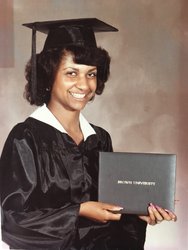
As we look back on 40 years of Brown CS, successfully funding our UTA Endowment has been one of our most important but also our most gratifying recent milestones. UTAships are tremendous gifts, but in many cases, they’re also historical documents. Each of them tells a story, and some are …
The Computing Research Association (CRA) is a coalition of more than 200 organizations with the mission of enhancing innovation by joining with industry, government and academia to strengthen research and advanced education in computing. Every year, they recognize North American students who show phenomenal research potential with their Outstanding Undergraduate Researcher Award, and in …