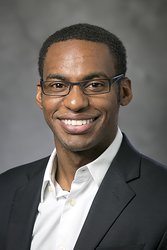
Brown CS Professor
Kathi Fisler has been named a 2021 Distinguished Member for the Association for Computing Machinery (ACM). ACM is the world's largest educational and scientific computing society, and they’ve recognized Kathi for her “Outstanding Educational Contributions to Computing”. The Distinguished Members grade recognizes members who have achieved important accolades or made a significant impact on the computing field, as supported by letters from others in the computing community.
Recent studies show that, in developing regions (e.g. Africa and Southeast Asia), fast internet connectivity lifted approximately 2.5 million people out of extreme poverty [1] and techniques to improve web performance (e.g. Google’s AMP) improved profit by 20% [2]. Given these studies, it is unsurprising that significant work and effort have gone into improving connectivity in these regions. These efforts range from improving the mobile networks (from 2G to 4G and now 5G) and improving networking infrastructure to reducing the cost of mobile data rates and increasing the amount of local language content. Although these efforts offer tremendous benefits, a …
After more than forty years at Brown, after publishing four books and dozens of papers and earning some of the highest honors in his field, Eugene Charniak is retiring.
“We’ve been extremely fortunate to have Eugene as a colleague,” says Professor John Savage. “His passion is a rare gift, and when you have that kind of drive, it makes you more inventive. He’s contributed very pointedly to computer science over the years.”
Brown CS Professor R. Iris Bahar has been elevated to a fellow of the Institute of Electrical and Electronics Engineers (IEEE) as of January this year. IEEE is the world’s largest technical professional organization that is dedicated to advancing technology for the benefit of humanity. The Fellow grade is a distinction awarded to those who have made important individual contributions in any of the IEEE fields of interest. Iris Bahar was honored by IEEE for her “contributions to modeling and design of power-aware and noise-tolerant nanoscale computing systems.” In particular, Iris was an early pioneer in exploring computer architecture level …
This past Fall, 2021 semester in CSCI 1951C Designing Humanity Centered Robots, students explored how emerging technologies might shape our lives in the near future. They did this through designing and building working prototypes that explore the “how” and “why” of new technologies. The class is taught by Ian Gonsher, Assistant Professor of the Practice in the School of Engineering and Department of Computer Science at Brown University. His course attempts to foster a creative, collaborative environment for students that allows for the development of working prototypes that integrate both hardware and software.
When I joined Brown CS as a communications and outreach specialist eight years ago, most of what I initially encountered was reassuringly as I’d expected. Coffee consumption was as high or higher than I’d seen in the tech sector. One of the legends of the field was lecturing in shorts and a Hawaiian shirt. There was an entire mailing list devoted to a thriving board game culture.
But one of the first emails I received was more of a surprise. Written by a Brown CS alum, it was less of a lament for the past and more of a critique …
Brown CS alum Guillaume Marceau, Professor Kathi Fisler, and Professor Shriram Krishnamurthi have just received the Onward! 2011 Most Notable Paper Award. This honor is given annually to the authors of a paper that was presented at the Onward! conference, an international event focusing on everything to do with programming and software. The papers are judged based on the influence they have had and their impact over the last ten years.
Each year, Cadence, a computational software company focusing on tools for electronic design automation, awards its Women in Technology Scholarship to support and celebrate young women who are starting their careers. Recently, Brown CS student Sreshtaa Rajesh was declared one of the winners, earning a $5,000 stipend. "Your impressive academic achievements, professor recommendations, and drive to shape the future of technology set you apart from the many talented women we considered," writes Academic Network Program Manager Mallory Clemons of Cadence. "We are excited for what the future holds for you and the impact you will make in technology."
Making the most of opportunities for entrepreneurship support at Brown, four undergraduates combined their distinctive skills, talents and experiences to change how health care is provided to vulnerable patients.
In an email to the Brown CS community on December 10, Department Chair Ugur Çetintemel announced that AStaff member Lauren Clarke will become the new Brown CS Department Manager, effective as of January 1, 2022. Lauren has been on the Department of Computer Science staff since 2004 and served as Academic and Industry Partners Program (IPP) Manager since 2013. In her current role, she’s responsible for managing the Brown CS PhD program, coordinating course offerings, managing the IPP, and supervising some members of AStaff, among other tasks.